
The Tunepike Blog
The Myth of the Fancy Reed: What Beginning Clarinet Players Really Need
By Dave Schumacher · November 5, 2026
Parents ask me all the time whether their kid needs a better reed. Sometimes they've been told that a harder reed will help their child develop faster. I don't buy that, especially with a first-year student.
But before you worry about the reed, the clarinet itself has to work.
Start with a clarinet in good working order
If the pads aren't sealing or the keys are out of adjustment, you've already put the student at a disadvantage.
I see this a lot, particularly with inexpensive instruments bought online or used clarinets that haven't been serviced. I'm not saying every inexpensive clarinet is bad. But have a qualified repair technician check it before your child starts playing, so your child has a fair chance to succeed.
I've had students come into lessons struggling to get certain notes out, convinced they're doing something wrong.
"It's probably me!"
Well, maybe. But I've learned to check the instrument first. More often than not, that's where the problem is. And no amount of practice, or a more expensive reed, is going to fix a leaking clarinet.
Think about what a beginner is actually trying to do
Here's a kid who's never played clarinet before. They've got a mouthpiece in their mouth, a reed on it, and they're trying to figure out how to make a sound.
Some get it almost immediately. Others struggle.
They haven't developed any real control over their embouchure yet. That's the way the lips and facial muscles work around the mouthpiece. It takes time to develop, and putting a harder reed on there isn't going to speed things up.
Then there's putting the reed on correctly. Is it wet enough? Is it on straight? Is it chipped? I've seen plenty of kids trying to play on reeds that weren't set up right.
You can buy the greatest reed in the world, but if it's not on the mouthpiece properly, what good is it going to do?
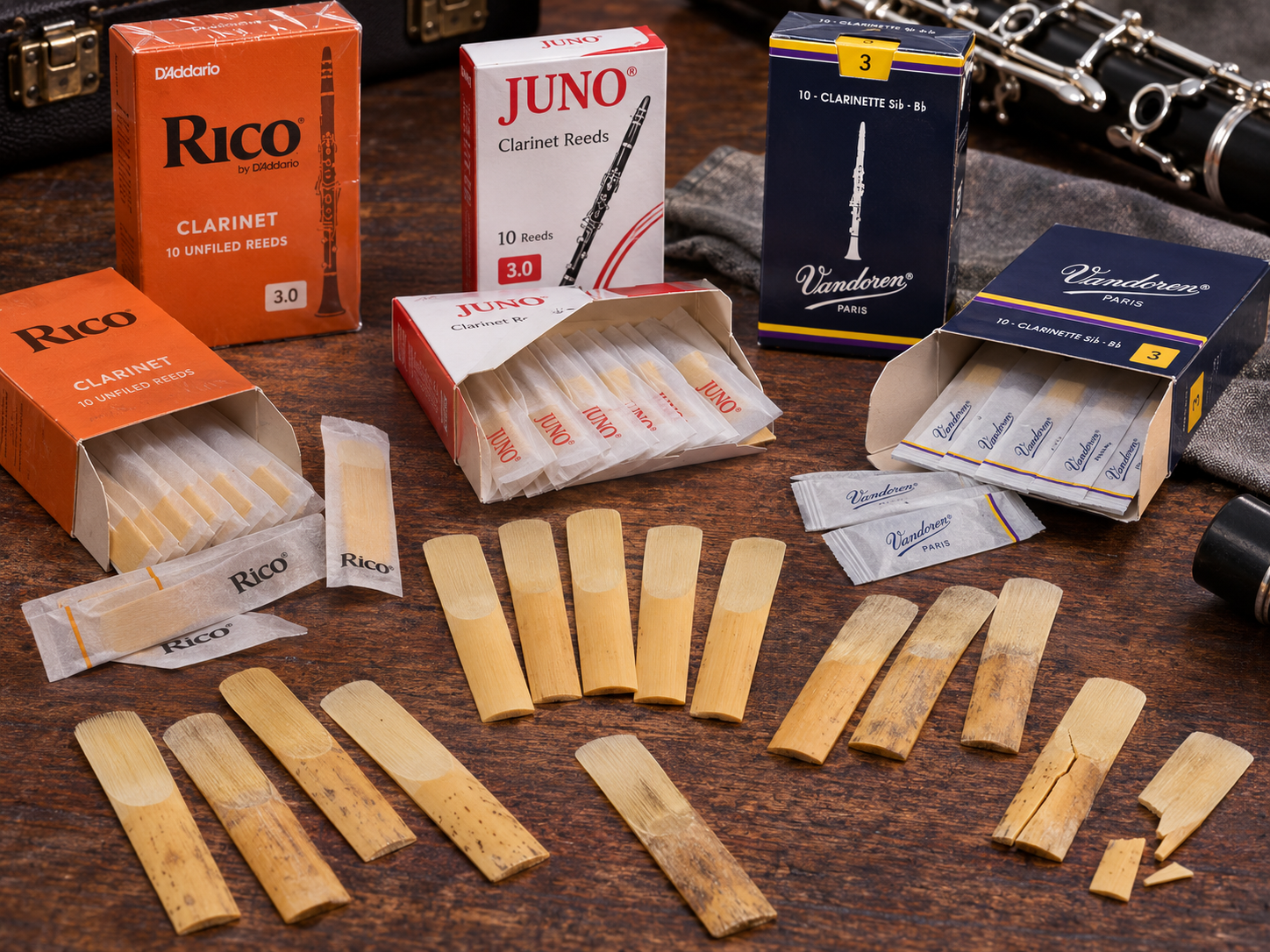
There's nothing wrong with Rico or Juno
I start my beginning clarinet students on a Rico or Vandoren Juno, strength #2. I've had good results with both.
What bothers me is what sometimes comes in rental clarinet cases. Some companies include really inexpensive "no name" reeds. We see plenty of them, and frankly, they're horrible.
If a rental comes with a Rico or Juno, that's absolutely OK with me. There's no reason to spend more money just because somebody thinks a beginner needs a premium reed.
My advice to parents is to buy a box. Kids chip reeds, crack them, and sometimes keep trying to play on a damaged one without realizing it. You need spares.
And if you're looking for Rico reeds, they're sold as D'Addario Rico now.
What about Vandoren Traditional?
I know teachers who start their students on a Vandoren Traditional 2.5, the blue box.
It's an excellent reed. But in my opinion, it's too much reed for a kid who's just starting clarinet.
I'd rather give that student something they can play comfortably. If they need a harder reed later, we'll deal with that then.
Reed strengths aren't standardized between brands, either. A Vandoren Traditional 2.5 generally plays harder than a Rico 2.5.
When should a student move to a harder reed?
Not just because they're in their second year of band.
I've had private students tell me their teacher said it was time to move up because they'd been playing for a certain number of years. I don't agree with that approach.
What matters to me is how they're actually playing. I listen to the student, not the calendar. Once a student is making a stable tone, if I think a harder reed will help, I'll try one. But first I want to make sure the problem isn't the embouchure, the air, or the clarinet itself.
A harder reed may feel a little more resistant at first. That's normal. But if they're fighting it just to get a sound, what's the point?
A few things I'd tell any parent
Make sure the clarinet works properly, especially if you bought it used or bought an inexpensive one online.
A #2 Rico or Vandoren Juno is a perfectly good place to start.
Buy reeds by the box. Believe me, you'll need them.
Don't assume a harder or more expensive reed is better.
If your child is struggling, don't automatically assume they're not practicing enough. It could be the instrument, or they may just need some good instruction.
There's one other part of this discussion that deserves its own article: the mouthpiece. In some ways, I think it's even more important than the reed. We'll get into that next time.
What do you think?
[poll:intro-clarinet-reeds]
Have a question about your student's clarinet setup? You can reach me at dms@tunepikemusic.com. I'm happy to help.
Comments
No comments yet — be the first.